🔥THE HEAT IS ON🔥 What the Science Says About Sauna Use for Health, Longevity & Performance

Sauna bathing has moved well beyond the spa and gym locker room. A growing body of observational research, randomized trials, and mechanistic studies now links regular heat exposure to measurable benefits for the heart, brain, muscles, and lifespan — with some important caveats. Here's a science-based look at what sauna use can and can't do.
The Big Picture: Two Main Types
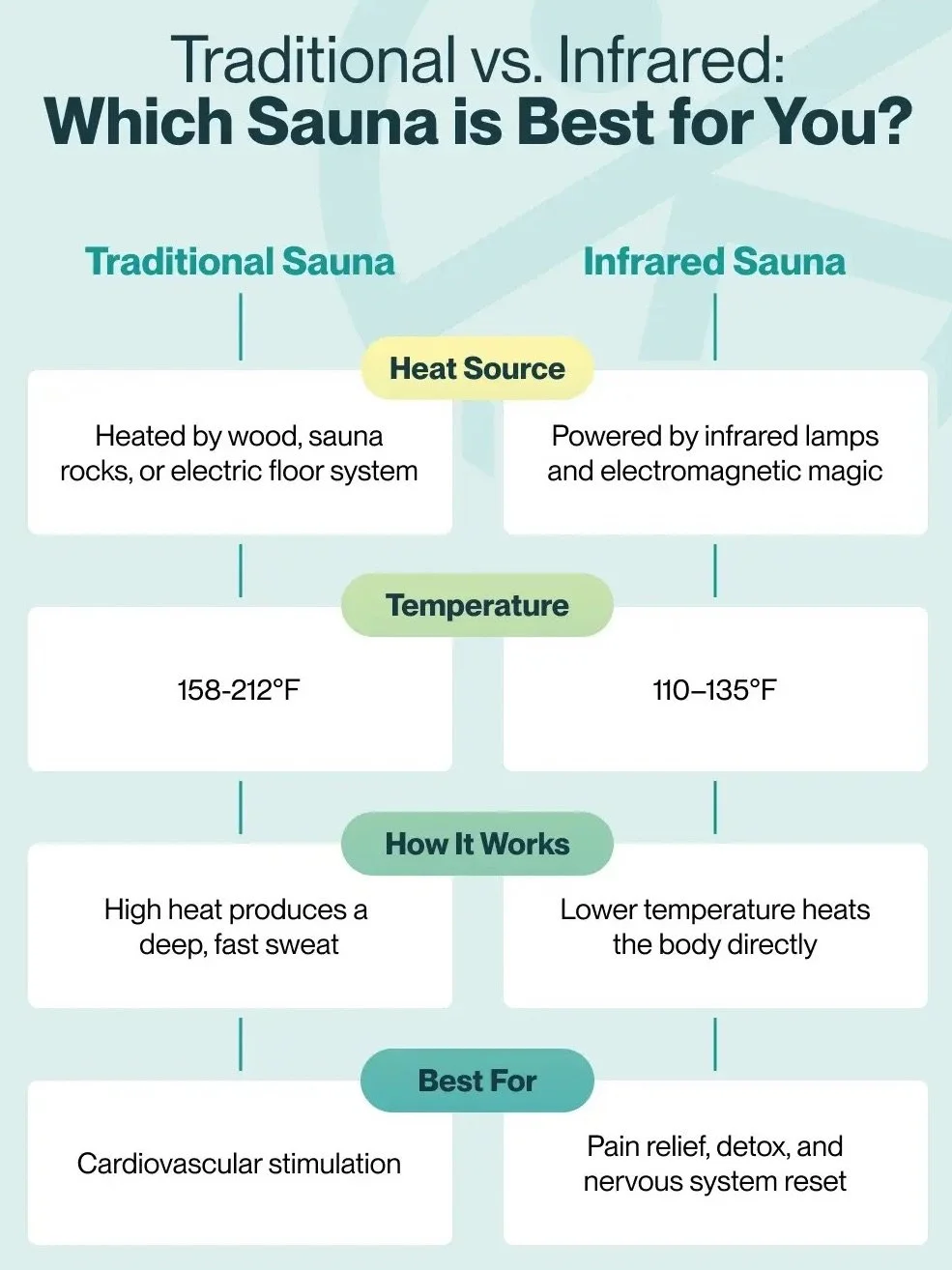
Traditional (Finnish-style) saunas heat the surrounding air, typically to 150°F–195°F (65°C–90°C), using wood, electric, or gas heaters with rocks. Infrared saunas use infrared lamps that heat the body directly rather than the air, operating at a gentler 113°F–140°F (45°C–60°C). Traditional saunas induce heavier sweating and a more intense cardiovascular load; infrared saunas are more tolerable for heat-sensitive users while still triggering many of the same physiological responses.
Cardiovascular Benefits
The strongest evidence for sauna use comes from cardiovascular research. The Kuopio Ischemic Heart Disease (KIHD) cohort study of over 2,300 Finnish men found a dose-dependent relationship between sauna frequency and heart health: men who used the sauna 4–7 times per week had a 50% lower risk of fatal cardiovascular disease and a 63% lower risk of sudden cardiac death compared to those who used it once a week. Longer sessions (19+ minutes) were also more protective than shorter ones.
A 2022 multi-arm randomized controlled trial (Lee et al., American Journal of Physiology) tested this experimentally: sedentary adults with cardiovascular risk factors who did an 8-week exercise program plus a 15-minute post-workout sauna session improved cardiorespiratory fitness, systolic blood pressure, and total cholesterol significantly more than those who exercised alone — with systolic blood pressure dropping an additional 8 mmHg.
Mechanistically, heat exposure raises heart rate (up to 100–150 beats per minute, similar to moderate exercise), dilates blood vessels, improves arterial compliance and flow-mediated dilation (a marker of endothelial health), and lowers resting blood pressure over time. Regular sauna use has also been associated with reduced risk of hypertension, stroke, and even pneumonia in large cohort studies.

Longevity and Brain Health
Beyond the heart, frequent sauna use in the KIHD cohort was linked to a 66% lower risk of dementia and 65% lower risk of Alzheimer's disease among men bathing 4–7 times weekly versus once weekly, alongside lower all-cause mortality (about 40% lower among frequent users). Proposed mechanisms include increased expression of heat shock proteins, which help repair damaged proteins and are implicated in protecting against neurodegenerative disease and muscle atrophy; activation of Nrf2, a master regulator of antioxidant and anti-inflammatory gene expression; and a hormetic effect similar to exercise, in which mild, repeated stress conditions the body to handle larger future stressors.
Because these longevity findings are largely observational, they can't fully rule out confounding factors like socioeconomic status or baseline health — though the KIHD researchers adjusted for many of these, and the dose-response pattern (more sauna, more benefit) strengthens the case for a real effect.

Athletic Performance and Recovery
For athletes, sauna use post-exercise shows promise as a recovery tool. A 2023 crossover study of male basketball players found that a 20-minute infrared sauna session after intense resistance training reduced the drop in explosive jump performance the next day and lowered subjective muscle soreness compared to passive recovery, with no negative effect on nighttime heart rate variability.
Heat acclimation from regular sauna use has also been shown to increase plasma volume and red blood cell count, improving endurance; one small study of distance runners found a 32% longer time-to-exhaustion after three weeks of post-workout sauna sessions. Sauna-induced heat shock proteins may additionally help preserve muscle mass during periods of injury or immobilization, an effect demonstrated in both human and animal studies.
Sauna/heat acclimation reliably expands plasma volume within days and can raise total hemoglobin mass by roughly 3–5% over several weeks in trained cyclists — numbers that are now considered roughly comparable to a 3-week altitude camp in elite athletes. Despite this, performance gains from either intervention are inconsistent at the elite level; a hemoglobin mass increase doesn't guarantee faster racing, and meta-analytic effects on hot-weather time trials are small.

Other Reported Benefits
Mood and stress: Sauna use raises beta-endorphins and modulates cortisol; small trials suggest heat therapy can reduce symptoms of mild depression.
Skin: May help balance skin pH and hydration through sweating.
Detoxification: Sweating helps excrete some heavy metals (e.g., lead, cadmium), though exercise-induced sweat is more effective for this than passive sauna sweat, and the long-term health impact is unclear.
Growth hormone: Sauna sessions can transiently boost growth hormone release, especially with repeated daily exposure.

Drawbacks and Safety Considerations
Sauna use is not risk-free, and the same heat stress that drives its benefits can be dangerous if misused.
Dehydration and overheating: Sessions typically cause 0.5–1 kg of fluid loss per hour; both traditional and infrared saunas can cause overheating, especially with long sessions or inadequate hydration.
Cardiac contraindications: Avoid sauna use with unstable angina, a recent heart attack, severe aortic stenosis, advanced heart failure, or decompensated cardiac conditions. Those with stable heart disease should consult a physician first.
Blood pressure: Sauna use lowers blood pressure, so it should be avoided by people with hypotension or those prone to dehydration.
Alcohol: Combining alcohol with sauna use raises the risk of dangerous blood pressure changes, arrhythmia, and even embolic stroke — never mix the two.
Fertility: Sauna use can transiently reduce sperm count and motility in men, particularly infrequent users; effects reverse within about six months of stopping.
Pregnancy: High core temperatures are linked to birth defect risk in the first trimester. Research suggests brief, moderate sauna sessions (around 20 minutes at 158°F/70°C or less) don't raise core temperature to concerning levels, but pregnant women should check with their physician before use.
Children and certain conditions: Children have less efficient thermoregulation; people with impaired sweating (autoimmune disorders, spinal cord injury) or acute illness/fever should avoid saunas.

Practical Guidelines
Start slow: 5–10 minutes for beginners, building tolerance over time.
Cap sessions at 15–20 minutes, even for experienced users.
Hydrate well before and after; skip alcohol entirely.
Aim for 2–4 sessions per week for measurable benefit; 4–7 sessions weekly shows the strongest associations with cardiovascular and longevity outcomes in observational data.
Post-workout timing (after aerobic or resistance exercise) appears to amplify cardiovascular and recovery benefits compared to sauna alone.
Listen to your body — exit if you feel dizzy, nauseated, or lightheaded, and talk to your doctor before starting if you have any heart, blood pressure, or chronic health condition.

This newsletter is for educational purposes and is not a substitute for individualized medical advice. Talk to your healthcare provider before starting sauna use, especially if you have a cardiovascular or other chronic condition.