The Truth About Artificial Sweeteners
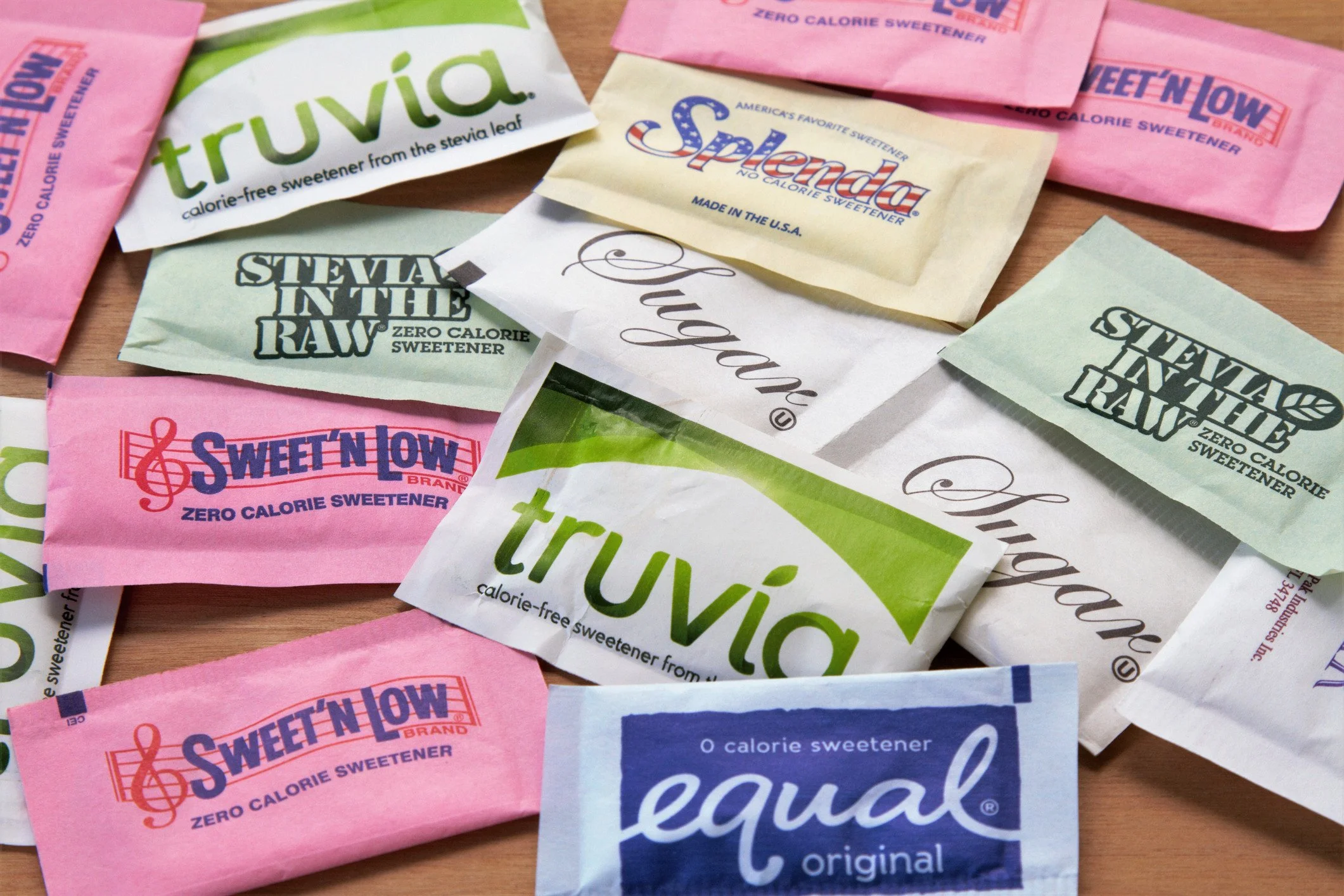
You've seen them everywhere — the pink packets, the yellow ones, the little drops in your coffee. Artificial sweeteners promise all the sweetness of sugar with none of the calories. But is it really that simple? As your nutrition coach, I've dug into the science so you don't have to. Let's break it all down in plain English.
So What Exactly Are These Things?
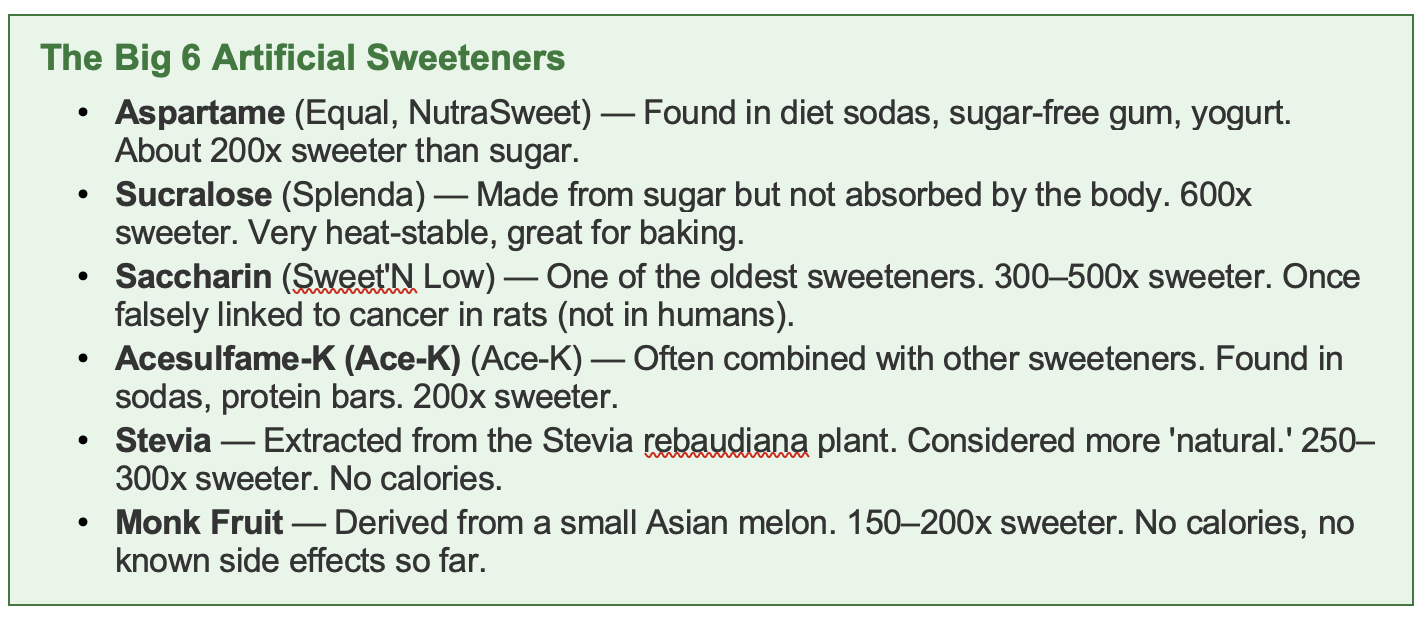
Artificial sweeteners are synthetic (or highly processed natural) compounds that taste sweet — anywhere from 200 to 20,000 times sweeter than regular sugar — but contain few or no calories. Your body either doesn't absorb them at all, or absorbs them without using them for energy. Here are the main players:
The Big 6 Artificial Sweeteners
The Good News: Potential Benefits
✅ They Can Help With Weight Management
Swapping sugar for a zero-calorie sweetener reduces calorie intake in the short term. A 2014 meta-analysis published in the American Journal of Clinical Nutrition found that replacing sugar with low-calorie sweeteners did lead to modest weight loss when used as part of a broader dietary plan. For someone drinking two sugary sodas a day, switching to diet versions could cut roughly 300 calories daily — that adds up.
✅ Blood Sugar Friendly
Most artificial sweeteners don't spike blood sugar the way regular sugar does. This makes them useful for people with type 2 diabetes or insulin resistance. The American Diabetes Association acknowledges that non-nutritive sweeteners can be a helpful tool for managing carbohydrate intake — though they're not a cure-all.
✅ Dental Health
Unlike sugar, artificial sweeteners don't feed the mouth bacteria that cause tooth decay. Xylitol, a sugar alcohol often grouped with this category, has actually been shown to actively reduce cavity-causing bacteria. That's why you see it in many sugar-free chewing gums.
✅ Versatility & Accessibility
For people who genuinely struggle to cut sugar cold-turkey, artificial sweeteners can serve as a transitional tool. They allow you to enjoy sweet-tasting foods while working toward reducing overall sugar dependence. Stevia and monk fruit, in particular, have clean safety profiles for most people.
The Not-So-Sweet Side: Concerns & Risks
⚠️ Gut Microbiome Disruption
This is where the science gets really interesting — and a little unsettling. A 2021 study in Cell found that sucralose and saccharin can alter the composition of gut bacteria in some people, which affects how we process food and regulate blood sugar. Our gut microbiome is essentially a community of trillions of bacteria, and when it gets disrupted, so can our metabolism, immunity, and mood.
⚠️ The 'Cephalic Phase' Response
Your brain is surprisingly easy to fool — until it isn't. When you taste something sweet, your body prepares for incoming sugar: insulin gets released, hunger signals shift, cravings rev up. Artificial sweeteners trigger this 'cephalic phase' response but deliver no actual energy. The result? You may feel hungrier afterward, potentially leading to overeating. Some research suggests habitual sweetener use may actually increase sugar cravings over time.
⚠️ Aspartame & Headaches / Sensitivity
Aspartame is one of the most studied food additives in history, and for most people it's considered safe. However, a notable subset of individuals report joint aches at levels that mirror the disease lupus, headaches, brain fog, or mood changes after consuming it. People with phenylketonuria (PKU), a rare metabolic disorder, must avoid it entirely. In 2023, the World Health Organization also reclassified aspartame as 'possibly carcinogenic' — though importantly, this doesn't mean it causes cancer, just that more research is warranted.
⚠️ Psychological Relationship With Sweet Foods
Here's the bigger-picture concern I see most often in my nutrition coaching practice: artificial sweeteners can reinforce a reliance on intensely sweet flavors. Because they're so much sweeter than sugar, they recalibrate your palate. Over time, naturally sweet foods like fruit start to taste bland by comparison. You may find yourself needing more and more sweetness to feel satisfied. Kind of like an addict who needs more drugs to get a high…
⚠️ Erythritol & Cardiovascular Risk
A 2023 study in Nature Medicine raised eyebrows by linking erythritol (a popular sugar alcohol in keto products) to higher rates of blood clotting and cardiovascular events in people already at risk. While the research is still developing, it's a reminder that 'natural-sounding' doesn't automatically mean risk-free.
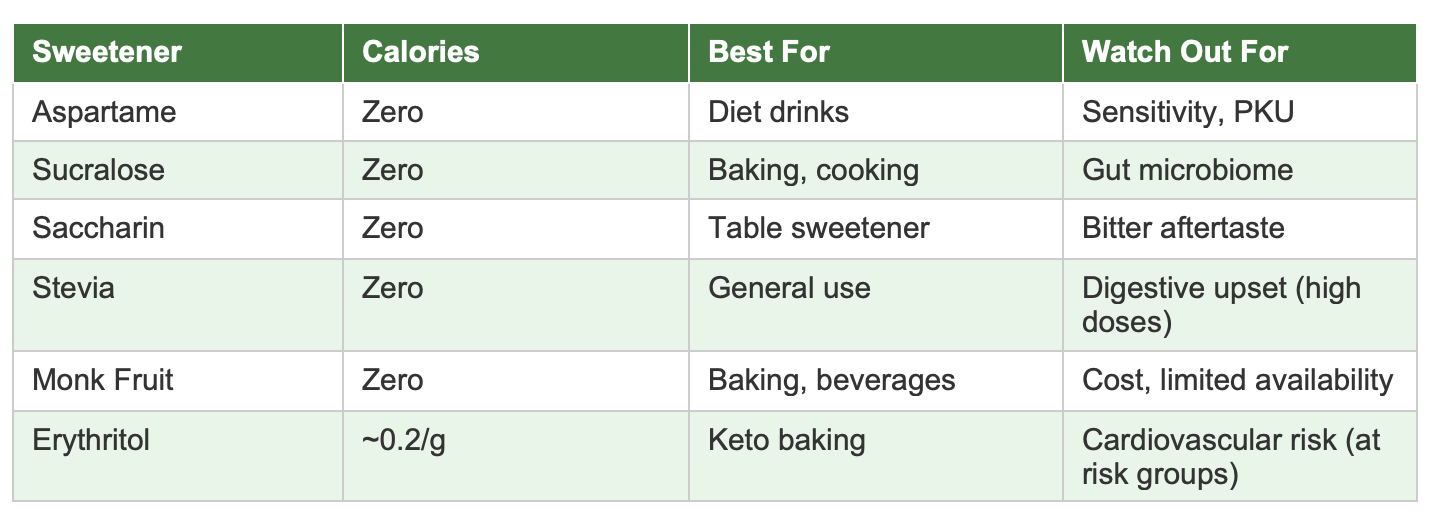
Quick Reference: Sweeteners at a Glance:
Going Back to Nature: Sweet Foods That Love You Back
Here's my favorite part of this conversation. Instead of outsmarting your sweet tooth with chemistry, what if we just fed it real food? Nature has packed incredible sweetness into whole foods that also come bundled with fiber, vitamins, antioxidants, and phytonutrients your body genuinely recognizes and uses.
🫐 Blueberries: The Star of the Show
Blueberries deserve a special mention. One cup contains about 15 grams of natural sugar — but also 4 grams of fiber, which slows sugar absorption and prevents blood sugar spikes. They're loaded with anthocyanins, the deep blue-purple pigments linked to improved brain function, reduced inflammation, and heart health. A 2019 study in the American Journal of Clinical Nutrition found that daily blueberry consumption improved vascular function in healthy adults. Whenever you’re craving something sweet, reach for a big bowl of blueberries - I guarantee it will curb your cravings for an unhealthy snack!
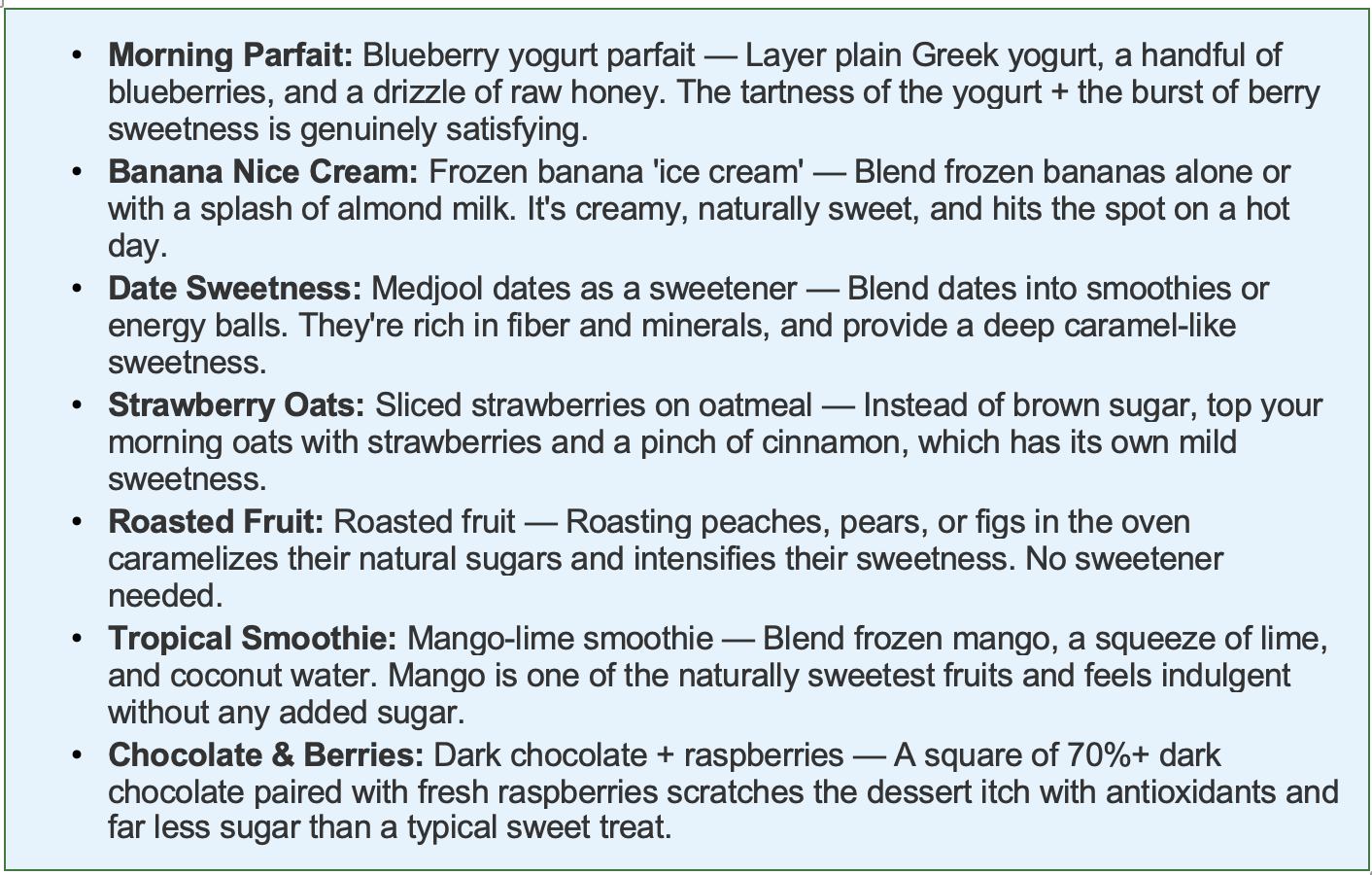
🍓 Delicious Ways to Enjoy Natural Sweetness
Here are some practical, Dr. Lauren-approved ideas to satisfy your sweet cravings without reaching for the sweetener packets:
💡 Coach's Tip: Retrain Your Palate
If you've been using artificial sweeteners for years, natural fruit might taste underwhelming at first — that's normal. Your taste buds have been calibrated to intense sweetness. Give yourself 2–3 weeks of cutting back on high-intensity sweeteners and you'll be amazed how sweet a ripe peach or a handful of grapes actually tastes. Your palate will reset, and natural foods will start to shine again.
The Bottom Line From Dr. Lauren:Artificial sweeteners aren't poison — but they aren't magic either. Used occasionally and mindfully, certain ones (stevia, monk fruit) carry minimal risk for most healthy people. But relying on them daily as a substitute for real dietary change can shortchange your health goals and keep you stuck in a cycle of sweet cravings.
The most sustainable path is to gradually shift your palate toward whole, naturally sweet foods. Blueberries, dates, mango, roasted fruit — these aren't just substitutes, they're upgrades. You get sweetness and nourishment in one beautiful package.
Eat the berry. 🫐
If you’ve been trying to kick the sweet-tooth habit, or other food—associated habits, let’s talk! Email, call or text me any time.