Alzheimer's Prevention: GLPs, snoring and soccer

Health and wellness has shifted from waiting for symptoms, to acting years ahead of them. Brain health has been the hardest place to apply that logic, because there was no number to track and no lever to pull. About 7 million Americans have Alzheimer's today, and that figure is projected to reach 14 million by 2060.
The disease starts 15 to 20 years before symptoms, which is a long runway that has mostly gone unused.
My PhD is in Neuroscience and I’ve been working on Alzheimer’s disease since 1992. Here is what's real, what's overstated, and where the field is heading.
What Alzheimer's Actually Is
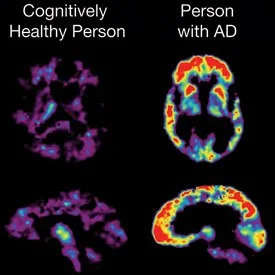
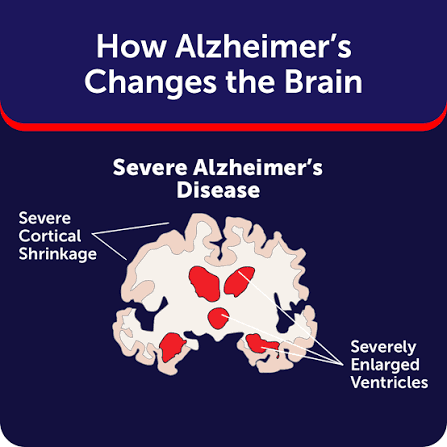
Two proteins misbehave. Amyloid beta clumps into plaques outside brain cells, often 15 to 20 years before memory problems appear. Tau, which normally helps hold neurons together, detaches and twists into tangles inside them. Tau tracks symptoms more closely than amyloid does, which may explain why amyloid-only drugs have underwhelmed.
Inflammation, blood flow, energy metabolism, and waste clearance also play roles. Alzheimer's looks less like one thing going wrong and more like several problems feeding each other, and the mix may differ from person to person.
The First Real Biomarker
In May 2025, the FDA cleared the first blood test for Alzheimer's pathology, the Lumipulse P-tau217/beta-amyloid ratio. Its positive predictive value is 92% and its negative predictive value is 97%. Two follow-up results came out at this year's Alzheimer's Association conference in London:
Primary care accuracy: In a Swedish study of 1,300+ patients, family doctors with blood test results diagnosed Alzheimer's correctly 93% of the time, nearly matching specialists (94%). Without the test, they were right 65% of the time.
Predicting the future: Among about 2,700 cognitively healthy older adults followed for a decade, an estimated 78% of those with very high P-tau217 developed cognitive impairment within ten years.
The catch: Unlike a high LDL, a high P-tau217 doesn't yet come with a proven intervention. Current guidance recommends these tests only for people who already have memory or thinking problems. Even so, that's a real advance, since a third of what looks like Alzheimer's is something else, some of it treatable.
What About APOE4?
One copy of APOE4 raises risk roughly 3.5 times. Two copies, carried by about 2% of people, raise it roughly 15 times. A 2024 Nature Medicine study suggested that two copies should be considered a genetic form of Alzheimer's, though that idea is still debated. Carriers also face a higher risk of ARIA (brain swelling and bleeding) on anti-amyloid drugs.
The encouraging part is that in the U.S. POINTER trial, lifestyle benefits appeared regardless of APOE4 status. Genes may change where you start, not whether the work is worth doing.
"Type 3 Diabetes" and the GLP-1 Question
"Type 3 diabetes" isn't a real diagnosis, but it points at something real: Alzheimer's brains show disrupted insulin signaling and poorer glucose use. Whether that causes the disease or results from it is still unknown.
The trial: The evoke and evoke+ trials (3,808 people with early Alzheimer's) found oral semaglutide did not slow progression.
The observational data: Database studies show 40% to 70% lower dementia rates among GLP-1 users versus some other diabetes drugs. This is promising but not proof, since the groups differ in many ways.
The next test: PROTECT-Cog is a $100 million, three-year trial of a GLP-1 or similar drug added to a structured lifestyle program in at-risk older adults.
Prevention in 2026
No pill or protocol is proven to prevent Alzheimer's. The strongest trials measure cognition over two to three years, not eventual diagnosis. Still, the 2024 Lancet Commission estimates about 45% of dementia cases are potentially preventable through 14 modifiable risk factors, with midlife the highest-leverage window. They include hearing and vision loss, high LDL, hypertension, diabetes, obesity, smoking, alcohol, inactivity, depression, social isolation, head injury, air pollution, and less early-life education.
Tier 1: The protocol that beat a control group
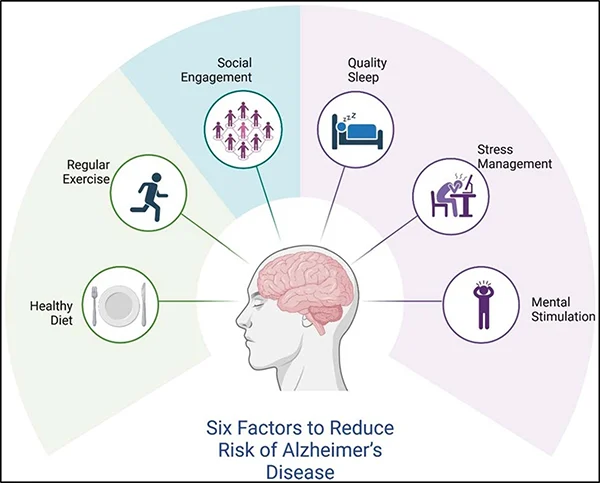
U.S. POINTER enrolled 2,111 adults aged 60 to 79 at risk for decline. The coached, structured version produced cognitive gains equal to roughly 1 to 2 years. Benefits held across sex, ethnicity, APOE4 status, and heart health, and people already accumulating pathology benefited too. The structured arm prescribed:
Aerobic exercise: 30 to 35 minutes, four times a week
Strength, balance, and coordination: twice a week
The MIND diet: leafy greens, berries, nuts, whole grains, olive oil, fish
Computerized cognitive training: 30 minutes, three times a week
Regular monitoring: blood pressure, weight, and labs
The sixth ingredient was structure: 38 facilitated peer meetings, tracked adherence, and clinician goal-setting. The model replicated in LatAm-FINGERS across 11 Latin American countries, where the structured arm showed 55% greater improvement. Because the program is multidomain, nobody knows which piece did the work. The whole prescription is the finding. Tennis, dance, and martial arts may be especially good, since they combine effort, coordination, learning, and social connection.
Tier 2: The newer levers
Metabolic numbers are brain numbers. LDL, blood pressure, and blood sugar all matter for the brain.
Fix hearing and vision. In the ACHIEVE trial, higher-risk adults using hearing aids saw cognitive decline slow by 48% over three years.
Treat sleep as maintenance. Aim for regular, restorative sleep, and get evaluated for sleep apnea if you snore loudly or wake unrefreshed.
Protect your head. New data at this year's conference added to concerns about soccer headers.
Three Things Worth Watching
The shingles vaccine. A Welsh natural experiment found vaccinated adults were about 20% less likely to be diagnosed with dementia over seven years. It isn't proof, but the design is stronger than most, and Australian data point the same way.
Intranasal insulin. The largest trial (289 people) showed no overall benefit, though device problems clouded it. A 2025 imaging study confirmed the insulin reaches memory-related brain regions.
Peptides. GLP-1s and intranasal insulin have the most human data so far and have raised more questions than answers. Designed peptides that block amyloid or tau, and peptide "shuttles" that carry drugs across the blood-brain barrier, remain mostly in cells and animals.
The Bleeding Edge
Tau reduction: Diranersen lowered tau and hinted at slower decline in phase 2, but missed its primary endpoint.
Gene editing: Researchers converted APOE4 to the lower-risk APOE3 in mice.
Focused ultrasound: It can temporarily open the blood-brain barrier, and a 2025 mouse study used it to deliver CRISPR therapy to the hippocampus.
None of these are ready for patients.
The Bottom Line
Alzheimer's is a slow, layered process, not one broken protein or one bad habit, which means there's no single point at which the story is over. What protects the brain mostly protects the body too: move often, manage blood pressure and blood sugar, sleep well, stay connected, keep hearing and vision working, and keep learning. None of it guarantees you'll avoid dementia, because biology isn't a moral scorecard. But the goal is to preserve clear thinking, independence, relationships, and curiosity along the way.