Fueling Strength Workouts: What to Eat and When

Adding strength training to an already packed endurance schedule is one of the smartest things an athlete can do — better power, fewer injuries, and stronger overall performance. But it also means your nutrition strategy needs to work harder too. Here's a practical breakdown of how to fuel your lifting sessions for the best results.
Carbs and Protein Both Matter
It's easy to assume carbs are for endurance and protein is for lifting, but that's an oversimplification. Both macronutrients play a real role in strength training.
Carbs: If you eat a solid meal before your session, sets under about ten per exercise generally don't require extra fueling during the workout itself. Training in a fasted state, on the other hand, tends to reduce performance — so eating beforehand is worth prioritizing if you want to lift at your best.
Protein: Aim for roughly 2.0–2.5 grams of protein per KILOGRAM of body weight (which is a little les than 1 gram per POUND of body weight) every day, regardless of how your training hours fluctuate. Consistency across the week matters more than hitting a "perfect" number on any single day. Split your intake across several smaller meals rather than trying to cram it into one or two sittings - 20-30g per meal, and 10g per snack. Good sources include eggs, tofu, legumes (black beans, lentils, edamame), avocado, salmon, chicken and quinoa.
Timing Your Meals Around Training
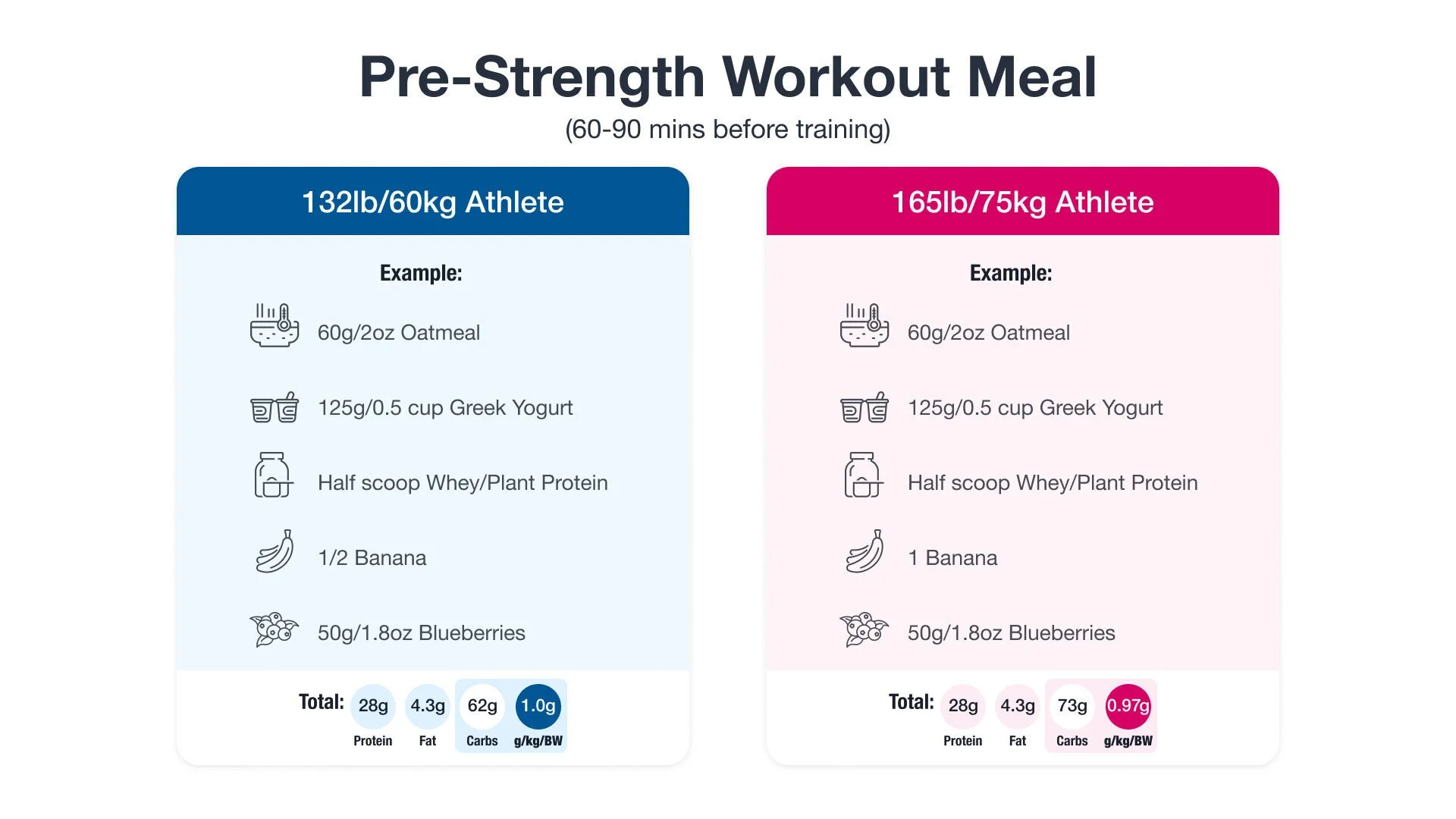
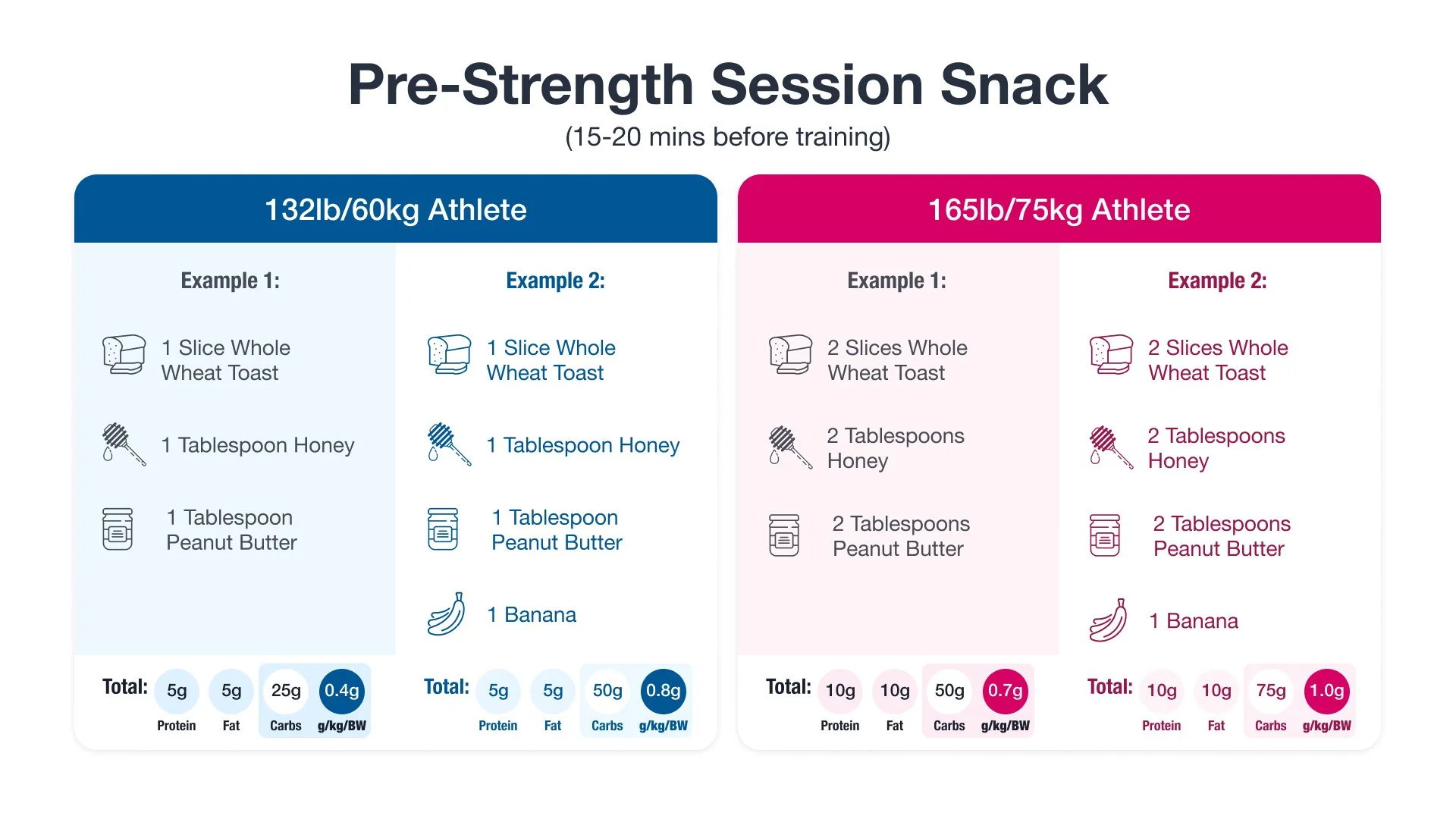
Before your workout: Eat a meal 60–90 minutes ahead of time that includes complex carbs, moderate protein, and a bit of healthy fat. If you need a little extra energy right before you start, a carb-focused snack 15–20 minutes beforehand can help. Just keep an eye on how your body responds — some athletes experience a dip in blood sugar 45–60 minutes after eating called rebound hypoglycemia, so it's worth testing what works for you.
During your workout: Most strength sessions don't need in-session fueling. But if your workout runs long (over 90 minutes) or involves high volume (more than ten sets per exercise), a small easily digestible carb source — think a banana, a tortilla with almond butter, or crackers — can help maintain energy and delay fatigue. Keep it modest; more isn't necessarily better here.
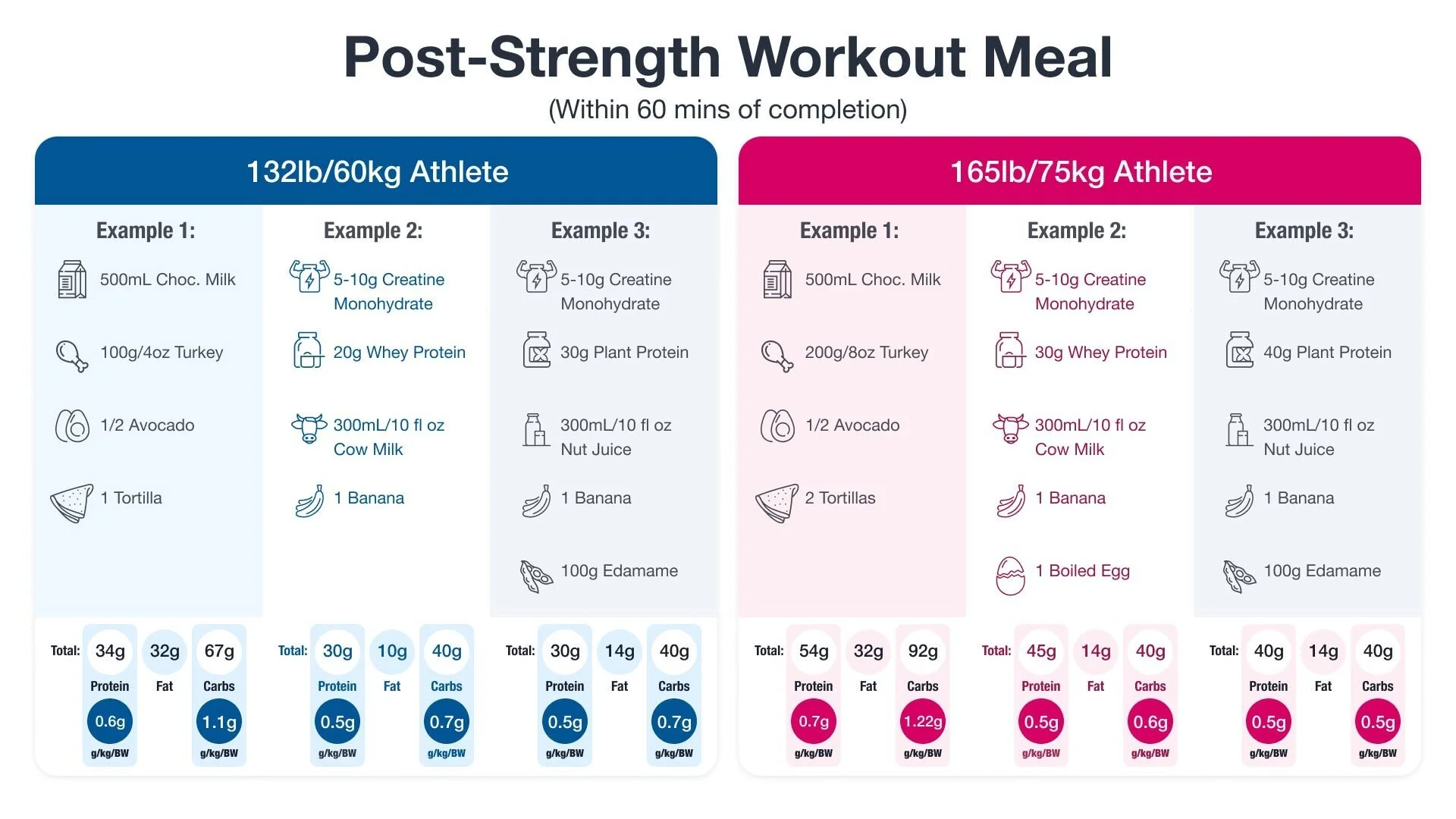
After your workout: There's no need to rush a protein shake the second you rack the weights. Take your time, shower, get settled, and eat a balanced meal with both carbs and protein within about 60 minutes — you actually have up to two hours to make the most of your recovery window. How many carbs you need depends on your day: lighter on low-volume days, closer to 2g per kilogram of body weight on heavy training days or when you have another session coming up.
Personalized Nutrition = Better Results
General guidelines are a great starting point, but the best nutrition plan is one tailored to you:
Match intake to training load. Higher-intensity, longer sessions or upcoming endurance workouts call for more carbs; lighter days call for less.
Align with your training phase. Strength-focused blocks benefit from a bit more protein and moderate fat; high-volume endurance phases call for prioritizing carbs.
Keep supplements in a supporting role. Creatine monohydrate, carb gels, protein powder, and caffeine can help in certain situations — but whole foods should still be the foundation.
Work with a nutrition and strength/endurance coach. Someone who has the experience in both strength and endurance, as well as nutrition, and can personalize your program to your needs (“hint hint” - that ‘someone’ is me!)
The Bottom Line
Fueling for strength training isn't about following one rigid formula — it's about consistently hitting your protein target week after week, timing your meals around your sessions, and adjusting your carb intake to match your training load. Pay attention to how your body responds, experiment a little, and let that guide your approach over time. Or work with someone like me who can guide you in this process based on SCIENCE!
(REF: Training Peaks)